Carespondence logo

A caregiver's notebook and planner open on a table with glasses and coffee, ready for writing down daily care notes at home.

What to Write Down
When You Are Caring for Someone at Home

What to Write Down When You Are Caring for Someone at Home

What to Write Down
When You Are Caring for Someone at Home

Practical Tips | Family Caregiving

The Carespondence Times · July 2026 · 5 min read

Family Caregiving

Practical Tips

Give yourself permission to keep it practical.

The easier your system is, the more likely you are to actually use it.


Making It Part of Your Routine

One reason caregivers stop keeping notes is because it starts feeling like one more task on an already overwhelming list.

That makes sense.

Caregiving already asks you to remember appointments, medications, phone calls, and everything else happening throughout the day.

The last thing you need is another complicated system.

Instead, find one routine that fits naturally into your day.

Some caregivers write a few notes after dinner. Others update a notebook after every doctor's appointment. Some use the notes app on their phone while they are waiting in the parking lot before driving home.

There is no right way.

The best method is the one you will actually come back to tomorrow.

Because consistency matters far more than perfection.


Looking Back Can Be Just As Helpful As Looking Ahead

One of the hardest parts of caregiving is realizing how gradually things change.

When you are living it every day, it is easy to miss how much has shifted over time.

Looking back at your notes can answer questions that memory alone cannot.

When did this first start?

Has this happened before?

Is this getting better, worse, or staying about the same?

Those answers become much easier to find when you have been writing things down along the way.

And sometimes seeing those patterns helps you feel more confident about the decisions you need to make next.

You do not need perfect records.

You do not need a complicated tracking system.

You just need one reliable place to capture what matters, so you are not carrying every detail in your head.

If keeping a notebook works for you, keep the notebook. The method matters less than having one. Carespondence was built to be that one reliable place. Tap to log what happened, and it becomes a timeline you can look back on and share with family.

You can learn more at carespondence.com.

Give yourself permission to keep it practical.

The easier your system is, the more likely you are to actually use it.


Making It Part of Your Routine

One reason caregivers stop keeping notes is because it starts feeling like one more task on an already overwhelming list.

That makes sense.

Caregiving already asks you to remember appointments, medications, phone calls, and everything else happening throughout the day.

The last thing you need is another complicated system.

Instead, find one routine that fits naturally into your day.

Some caregivers write a few notes after dinner. Others update a notebook after every doctor's appointment. Some use the notes app on their phone while they are waiting in the parking lot before driving home.

There is no right way.

The best method is the one you will actually come back to tomorrow.

Because consistency matters far more than perfection.


Looking Back Can Be Just As Helpful As Looking Ahead

One of the hardest parts of caregiving is realizing how gradually things change.

When you are living it every day, it is easy to miss how much has shifted over time.

Looking back at your notes can answer questions that memory alone cannot.

When did this first start?

Has this happened before?

Is this getting better, worse, or staying about the same?

Those answers become much easier to find when you have been writing things down along the way.

And sometimes seeing those patterns helps you feel more confident about the decisions you need to make next.

You do not need perfect records.

You do not need a complicated tracking system.

You just need one reliable place to capture what matters, so you are not carrying every detail in your head.

If keeping a notebook works for you, keep the notebook. The method matters less than having one. Carespondence was built to be that one reliable place. Tap to log what happened, and it becomes a timeline you can look back on and share with family.

You can learn more at carespondence.com.

Give yourself permission to keep it practical.

The easier your system is, the more likely you are to actually use it.


Making It Part of Your Routine

One reason caregivers stop keeping notes is because it starts feeling like one more task on an already overwhelming list.

That makes sense.

Caregiving already asks you to remember appointments, medications, phone calls, and everything else happening throughout the day.

The last thing you need is another complicated system.

Instead, find one routine that fits naturally into your day.

Some caregivers write a few notes after dinner. Others update a notebook after every doctor's appointment. Some use the notes app on their phone while they are waiting in the parking lot before driving home.

There is no right way.

The best method is the one you will actually come back to tomorrow.

Because consistency matters far more than perfection.


Looking Back Can Be Just As Helpful As Looking Ahead

One of the hardest parts of caregiving is realizing how gradually things change.

When you are living it every day, it is easy to miss how much has shifted over time.

Looking back at your notes can answer questions that memory alone cannot.

When did this first start?

Has this happened before?

Is this getting better, worse, or staying about the same?

Those answers become much easier to find when you have been writing things down along the way.

And sometimes seeing those patterns helps you feel more confident about the decisions you need to make next.

You do not need perfect records.

You do not need a complicated tracking system.

You just need one reliable place to capture what matters, so you are not carrying every detail in your head.

If keeping a notebook works for you, keep the notebook. The method matters less than having one. Carespondence was built to be that one reliable place. Tap to log what happened, and it becomes a timeline you can look back on and share with family.

You can learn more at carespondence.com.

The goal is not to capture every moment.

It is to make sure the moments that matter are not lost.

The goal is not to capture every moment. It is to make sure the moments that matter are not lost.

One question many caregivers have is what they should actually be keeping track of.

The answer is usually simpler than people expect.

Start with the things you find yourself trying to remember over and over again.

Changes in appetite.

Sleep patterns.

Mood.

Energy levels.

Medication changes.

Appointments.

Questions you want to ask the doctor.

Instructions you receive during visits.

Anything that feels different from your parent's normal routine.

You can also write down things that seem small at the time.

Maybe they seemed more confused this morning.

Maybe walking across the house took a little longer than usual.

Maybe they forgot something they normally remember.

You do not have to decide whether every observation is important.

Sometimes the value of your notes is not in one moment.

It is in seeing the pattern that develops over weeks or months.


What You Do Not Need To Keep Track Of

One mistake caregivers often make is believing they need to document everything.

You do not.

You are not creating medical records.

You are creating reminders for yourself.

If your system feels overwhelming, it will probably be difficult to keep up with.

Simple is almost always better.

A few sentences at the end of the day can be more useful than pages of detailed notes that become impossible to maintain.

What Is Actually Worth Writing Down

A lot of caregivers assume they only need to start keeping notes when something goes wrong.

When there is a hospital stay, a new diagnosis, or a medication change.

But some of the most helpful notes are the ones you write during ordinary days.

Those are the days that help you notice patterns.

Maybe your parent has been sleeping a little more than usual. Maybe their appetite has slowly changed over the last few weeks. Maybe they have become less interested in conversations or activities they normally enjoy.

None of those things may seem urgent on their own.

But together, they can tell an important story.

When you write things down consistently, you are not just recording information.

You are creating a clearer picture of how your parent's care is changing over time.

That can make conversations with doctors easier, help family members understand what has been happening, and help you trust what you are seeing instead of wondering if you are remembering it correctly.

Why Writing Things Down Matters Even When Things Feel Stable

That is why keeping caregiver notes matters.

Not because you need perfect records.

Because memory has limits, especially when caregiving becomes part of everyday life.

Because you are trying to carry hundreds of small details that were never meant to live in one person's memory.

There comes a moment for a lot of family caregivers that catches them off guard.

A doctor asks a simple question.

"When did you first notice that change?"

Or maybe someone asks when your parent last fell. When a medication was adjusted. When they stopped sleeping through the night.

And you know you knew the answer.

You remember talking about it. You remember thinking there was no way you would forget something that important.

But standing there in the moment, the timeline feels blurry.

Was it last week?

A month ago?

Was it before the last appointment or after?

That realization can feel unsettling.

Not because you are careless.

Have a caregiving story to tell?

We feature real stories from real caregivers. You do not have to be a professional writer. You just have to have lived it.

Have a caregiving story to tell?

We feature real stories from real caregivers. You do not have to be a professional writer. You just have to have lived it.

Have a caregiving story to tell?

We feature real stories from real caregivers. You do not have to be a professional writer. You just have to have lived it.

Keeping track of medications for an elderly parent can feel like holding pieces of information that never stop changing.

Keeping track of medications for an elderly parent can feel like holding pieces of information that never stop changing.

Family Caregiving | Practical Tips

Illustration of a caregiver writing medication notes in a notebook at a kitchen table, with a pill organizer, prescription bottle, and phone nearby.

Nobody assigns you the role of family communicator. It just becomes yours.

Nobody assigns you the role of family communicator. It just becomes yours.

Family Caregiving

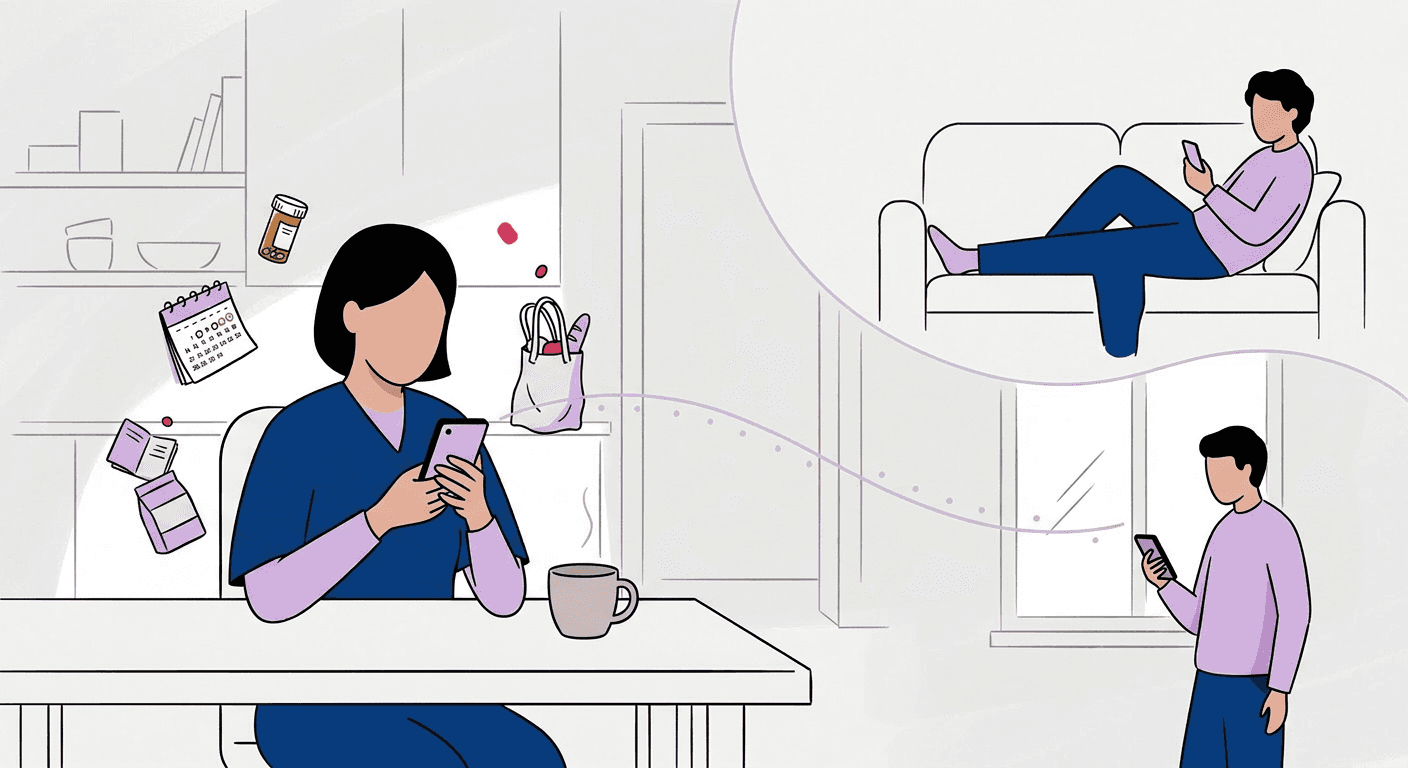
Illustration of a caregiver using her phone at home, with updates flowing to family members on their devices

Learn More

Record care in the moment. Stay organized. Keep everyone informed.

Record care in the moment. Stay organized. Keep everyone informed.

Caring for someone at home? Carespondence was built for you.

Caring for someone at home? Carespondence was built for you.